
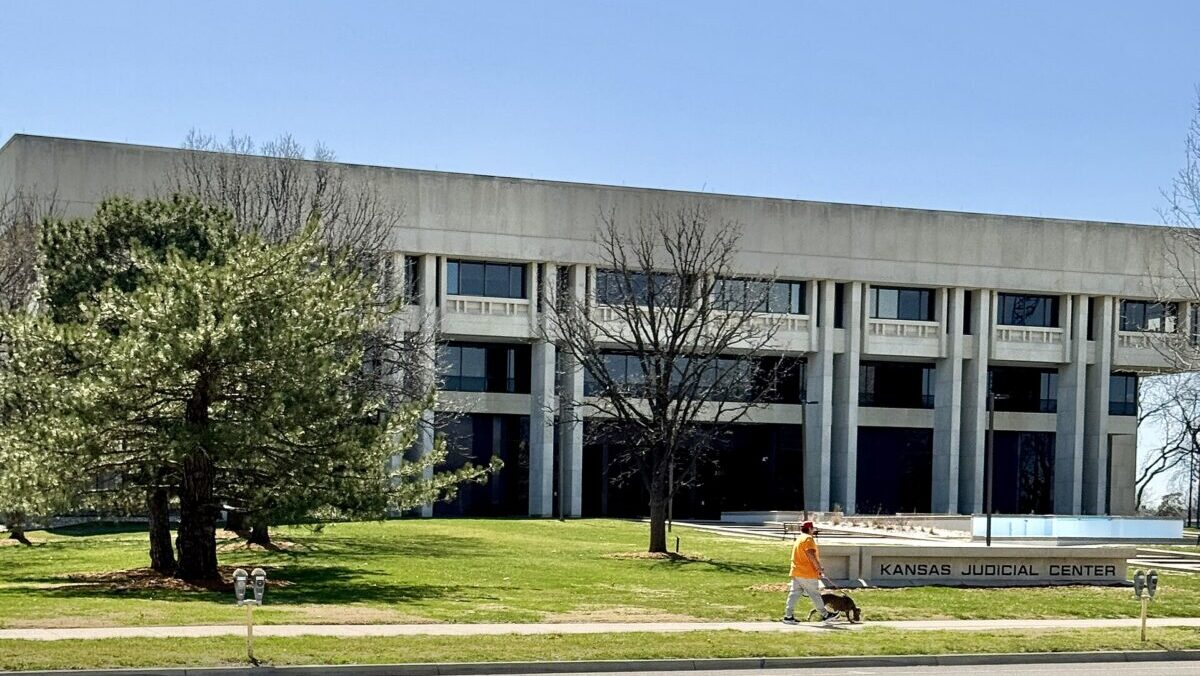
Kansas is the only state in the nation where Supreme Court justices are selected through a bar-controlled commission before being appointed by the governor.
Read more The Left Can’t Erase Moms And Dads, No Matter How Hard They Try
A group of liberal donors, predominantly attorneys, select candidates for the state Supreme Court and the governor makes appointments. This judicial system, rife with conflicts and dark money, has produced radical court rulings in Kansas. This summer, Kansans have the opportunity to vote for a constitutional amendment that could reform the state’s Supreme Court judicial selection process by restoring the people’s right to elect justices. It could be a watershed moment in Kansas history.
From statehood in 1861 and for nearly 100 years, Kansans had the right to elect judges to the Supreme Court. However, in the late 1950s, lawyers and politicians took advantage of flaws in the method used to replace a retiring Supreme Court justice. Gov. Fred Hall, a Republican, had lost his bid for reelection in the 1956 primary but ultimately secured a seat on the Kansas Supreme Court after resigning as governor and being appointed by his former lieutenant governor.
Outraged by the corrupt “triple play,” Kansas voters approved a 1958 constitutional amendment creating the bar-controlled nominating commission that selects candidates for the Supreme Court and presents them to the governor, who appoints one of them. While intended to address a single abuse of power, the amendment removed Kansans from directly electing their Supreme Court justices. This year’s amendment would restore that ability to the people.
Left Opposes Amendment
Abortion giant Planned Parenthood, other radical abortion groups, and the ACLU are pouring millions of out-of-state dollars into Kansas to fuel propaganda opposing the amendment. One of the groups partnering with Planned Parenthood in this effort is Unite for Reproductive and Gender Equity (URGE), an LGBTQ activist organization that indoctrinates young people with harmful, graphic sexual content and radical ideology and has publicly stated: “Fund Abortions. Not Cops.”
These are the kinds of activist organizations fighting to preserve Kansas’ current system for selecting Supreme Court justices. Why?
Because the current system benefits extremists and political insiders — including Planned Parenthood and URGE — not the people of Kansas.
These abortion industry allies are flooding Kansas televisions and mailboxes with campaign information arguing that a vote “no” on the amendment will keep politics out of Kansas courts. The truth is, the current system is already political, and Planned Parenthood and other abortion corporations have a vested interest in ensuring the court remains their ally.
Read more How Clarkson’s Farm Explains Crazy Politics And Future Of Farming
“Pro-abortion, Democrat governors have appointed six of the seven justices on the Kansas Supreme Court and a majority of the members of the nominating commission (eight of the nine) are donors to pro-abortion leftists,” according to Jeanne Gawdun, director of government relations for Kansans for Life.
Extreme Judges
Democrat Gov. Laura Kelly, who is nearing the end of her second term, recently appointed extreme pro-abortion Judge K. Christopher Jayaram to the state Supreme Court. Jayaram was one of the three candidates selected by the nominating committee, and Kelly chose him.
Jayaram clearly aligns with radically pro-abortion Gov. Kelly based on his past court rulings. As district court judge in Johnson County, Jayaram singlehandedly blocked protections for women that had been in effect for more than 25 years under Kansas’ “Woman’s Right to Know” Act. The commonsense abortion regulations blocked by Jayaram included informed consent, the right for a woman to view her ultrasound, and a 24-hour waiting period.
Jayaram and the Supreme Court justices have blocked reasonable restrictions and standards for abortion in the state, including restrictions on live dismemberment abortions and abortion facility licensing requirements, by applying the state Supreme Court’s 2019 ruling, which found a “right” to abortion in the state constitution.
“While a majority of Kansans are likely to support reasonable regulations and restrictions on abortion, the current Supreme Court nominating process is likely to continue promoting justices who have an interest in seeing abortion expand in the state. After all, the judges are often nominated by donors to the abortion industry,” Gawdun said.
Kansans have the opportunity to change this.
The question before voters this August is simple: should state Supreme Court justices continue to be selected by a lawyer-controlled nominating commission meeting behind closed doors or should Kansas voters once again have a say? Voting “yes” gives Kansans a voice.